100 Things to Stop Buying to Save Money Immediately
100 Things to Stop Buying to Save Money Immediately
Table of Contents
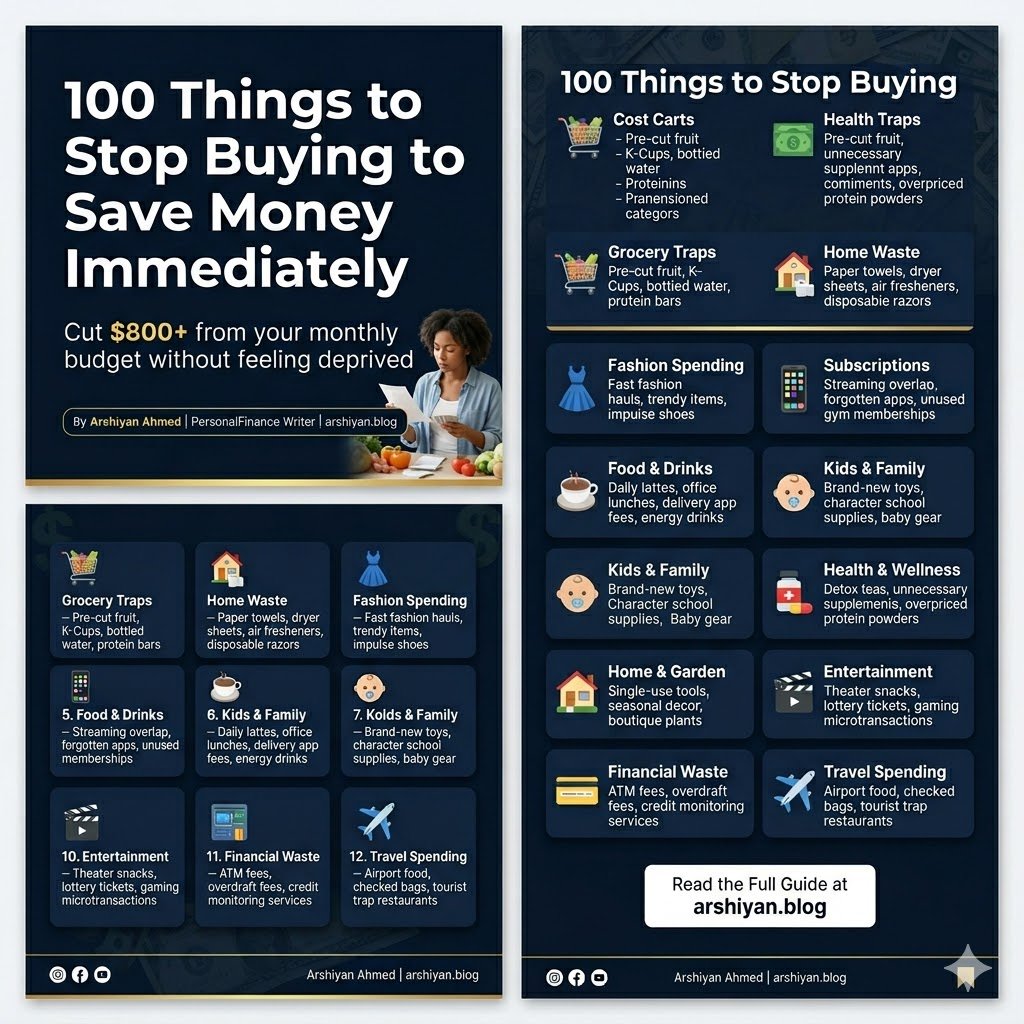
- The Kitchen and Grocery Store Money Traps (Items 1–15)
- Things Around the House You Do Not Need (Items 16–25)
- Clothing and Personal Style Spending (Items 26–32)
- Subscription Services and Digital Spending (Items 33–42)
- Food and Drink Outside the Home (Items 43–50)
- Kids and Family Spending (Items 51–55)
- Car and Transportation Costs (Items 56–60)
- Health and Wellness Purchases (Items 61–67)
- Home and Garden Purchases (Items 68–73)
- Entertainment and Lifestyle (Items 74–80)
- Financial and Administrative Waste (Items 81–87)
- Travel and Vacation Spending (Items 88–93)
- The Last Stretch (Items 94–100)
I remember the exact moment I realized I had a spending problem. I was standing in the checkout line at Target, cart loaded with stuff I did not walk in for, and my debit card got declined. Not because I was broke exactly, but because I had been bleeding money on small, forgettable purchases for so long that my checking account was basically on life support.
That was three years ago. Since then, I have cut my monthly spending by over $800 without feeling deprived. Not through some extreme frugal lifestyle either. I still eat well, travel occasionally, and enjoy life. I just stopped buying things that were quietly draining my wallet without giving me anything real in return.
This list is what I learned the hard way. Some of these will surprise you. Some will sting a little. All of them are worth thinking about. Read our Saving money guide.
The Kitchen and Grocery Store Money Traps
1. Pre-cut fruit and vegetables. You are paying sometimes triple the price for someone else to do ten seconds of work. Buy whole produce. Cut it yourself.
Money Saving Tips for Groceries: Cut Your Food Bill in Half
2. Single-serve coffee pods. A box of 24 K-Cups can cost $15 or more. A bag of ground coffee that makes the same amount? About $6. The math is not kind to pod machines.
3. Bottled water. Americans spend around $16 billion a year on bottled water. A filtered pitcher like a Brita costs $25 and lasts months. This one is a no-brainer.
4. Flavored oatmeal packets. Plain rolled oats cost a fraction of the price. Add your own cinnamon, banana, or honey. It takes 30 extra seconds.
5. Breakfast cereals with brand names. Store-brand cereals sit right next to the name brands, taste almost identical, and cost 40 percent less. Read the ingredients sometime. They are practically twins.
6. Pre-marinated meats. Marinating chicken yourself takes five minutes and costs pennies. The store charges a premium for that convenience.
7. Salad kits. A bag of romaine, some shredded carrots, and a bottle of dressing costs half what those trendy kits charge.
8. Sparkling water brands like LaCroix or Bubly. A SodaStream pays for itself within two months if you drink sparkling water regularly.
9. Gourmet popcorn. Pop your own kernels on the stovetop. A bag of kernels costs $2 and makes twenty servings.
10. Name-brand spices. Store-brand spices are often sourced from the same suppliers. The markup on brand-name spice jars is significant.
11. Protein bars. Most are glorified candy bars with a higher price tag. Eggs, Greek yogurt, and peanut butter are cheaper sources of protein.
12. Cooking wine. Any drinkable wine works for cooking. You do not need the stuff labeled “cooking wine,” which often has added salt and lower quality.
13. Pre-made smoothies. A single bottle at the store can cost $7. A bag of frozen fruit, some spinach, and a banana blended at home costs under $1.
14. Deli meat at the counter. Whole roasted chicken or a pork loin sliced at home costs significantly less per pound than premium counter deli cuts.
15. Fancy bread. Artisan loaves at $8 each are a treat, not a staple. Learning to bake a simple sandwich loaf saves real money over time.
Things Around the House You Do Not Need
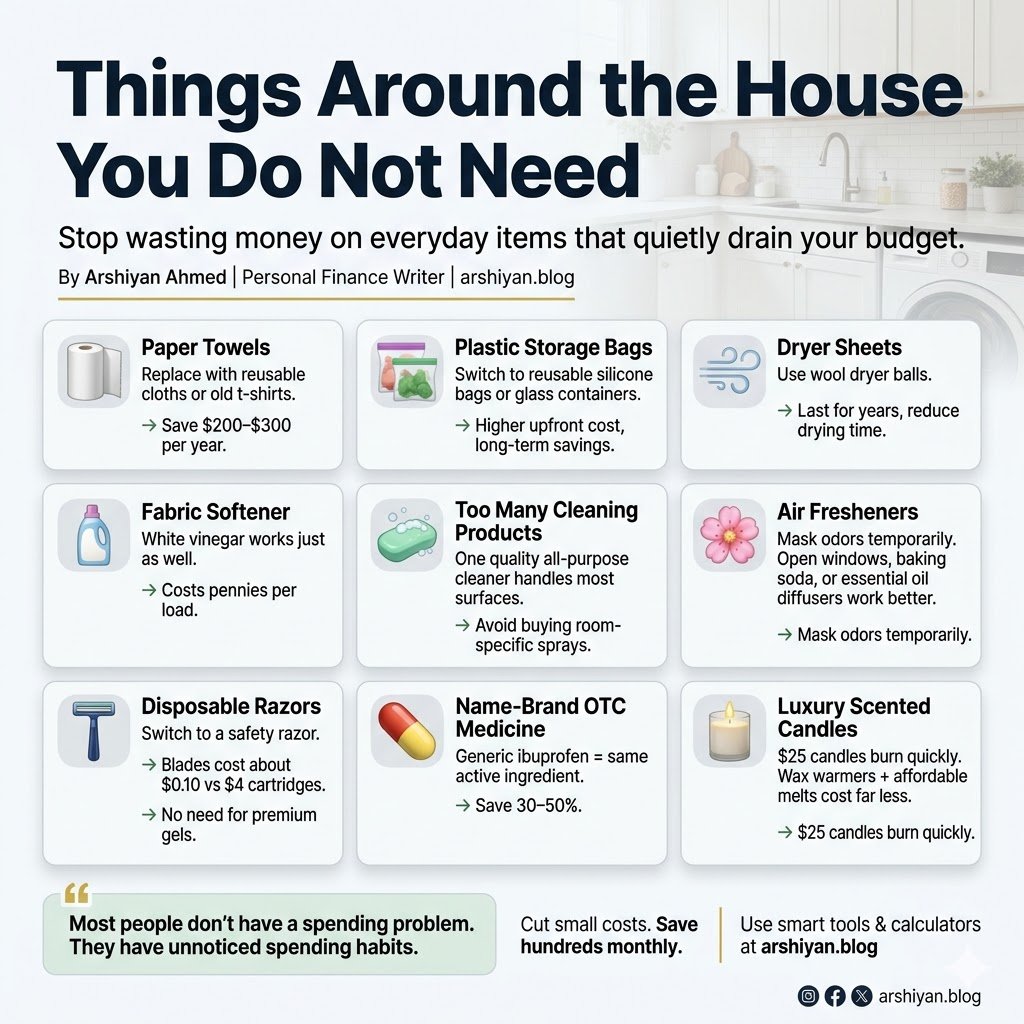
16. Paper towels. We replaced paper towels with a stack of old cut-up t-shirts. Wash and reuse. We buy maybe one roll every two months now instead of two per week.
17. Plastic storage bags. Reusable silicone bags or glass containers replace Ziplocs entirely. Higher upfront cost, but they pay off fast.
18. Dryer sheets. Wool dryer balls do the same job, reduce drying time, and last for years.
19. Fabric softener. White vinegar in the rinse cycle softens laundry just as well.
20. Cleaning product variety packs. One good all-purpose cleaner handles most surfaces. You do not need a different product for every room.
21. Air fresheners. These mostly just mask odors. Open windows, baking soda, or a diffuser with essential oils work better and cost less over time.
22. Disposable razors. A safety razor with replacement blades costs about $0.10 per blade versus $4 for a disposable cartridge.
23. Name-brand over-the-counter medicines. Ibuprofen is ibuprofen. The generic version from Costco or any pharmacy is the exact same active ingredient for half the price.
24. Expensive toilet bowl cleaners. A toilet brush and a splash of bleach is all you need.
25. Scented candles from Bath and Body Works. They smell wonderful. They are also $25 each and burn down in two weeks if used regularly. A wax warmer and cheap wax melts give similar results for far less.
Clothing and Personal Style Spending
26. Fast fashion hauls. Those $12 shirts fall apart after five washes. Buying two quality pieces instead of ten cheap ones saves money long-term.
27. Dry-clean-only clothing. Unless it is a special occasion piece, dry-clean-only items are a hidden ongoing expense.
28. Trendy items that will be out of style next season. Classic wardrobe pieces outlast trends every time.
29. New gym clothes every season. Good athletic wear lasts years. You do not need new leggings because a new color dropped.
30. Impulse shoes. Most people wear 20 percent of their shoes 80 percent of the time. Be honest with yourself before clicking add to cart.
31. Underwear and sock brands with logos. Kirkland brand socks from Costco. That is genuinely all I will say about this.
32. Alterations on clothes that do not fit. If something does not fit on the rack and requires significant tailoring, it is not the right purchase.
Subscription Services and Digital Spending
33. Multiple streaming platforms simultaneously. Pick two, rotate them every few months. You cannot watch everything at once anyway.
34. Cable TV. The average American pays over $100 monthly for cable. Most people use three apps at most.
35. Subscription boxes. Birchbox, FabFitFun, BarkBox. They feel fun for two months and then clutter your house. Most people cancel eventually.
36. Premium app upgrades you barely use. Check your phone right now. There is likely an app charging $4.99 a month you forgot existed.
37. Cloud storage you have not organized. Before paying for more storage, spend an afternoon deleting duplicate photos.
38. Music streaming premium when free works fine. Spotify free with a pair of earbuds during solo time is perfectly usable.
39. Gym memberships not being used. Planet Fitness charges $10 a month and still hurts when you have not been in four months. Cancel it.
40. VPN subscriptions for casual users. Unless you have a real need for privacy protection, most people do not use a VPN enough to justify $80 a year.
41. Meal planning apps. A Google Sheet, a weekly trip to the store, and some Pinterest searching does the same job for free.
42. Antivirus software for basic users. Windows Defender, which comes built into every PC, handles most threats well for everyday users.
How to Audit Your Monthly Subscriptions and Stop Wasting Money
Food and Drink Outside the Home
43. Daily coffee shop visits. A $6 latte every weekday costs $1,500 a year. Even making nice coffee at home with a decent grinder cuts that dramatically.
44. Lunch near the office. Packing lunch is the oldest advice in the book because it works. A $12 lunch out five days a week is $3,120 a year.
45. Delivery app fees and tips. DoorDash fees, service charges, and tips can add 30 to 50 percent to your food cost. Picking up saves significant money.
46. Bottled soda at restaurants. Water with lemon at a restaurant is free and you feel better afterward.
47. Airport food and drinks. Bring a reusable bottle and snacks. Airport prices are almost criminal.
48. Hotel minibar items. I once paid $9 for a Kit Kat. Never again.
49. Branded energy drinks. A Monster or Red Bull a day costs over $1,000 annually. Drip coffee or cold brew at home does the job.
50. Alcohol at restaurants and bars. Drinks have one of the highest markups of anything you buy in America. Drinking at home before going out is sometimes called “pregaming” and it is also just math.
Kids and Family Spending
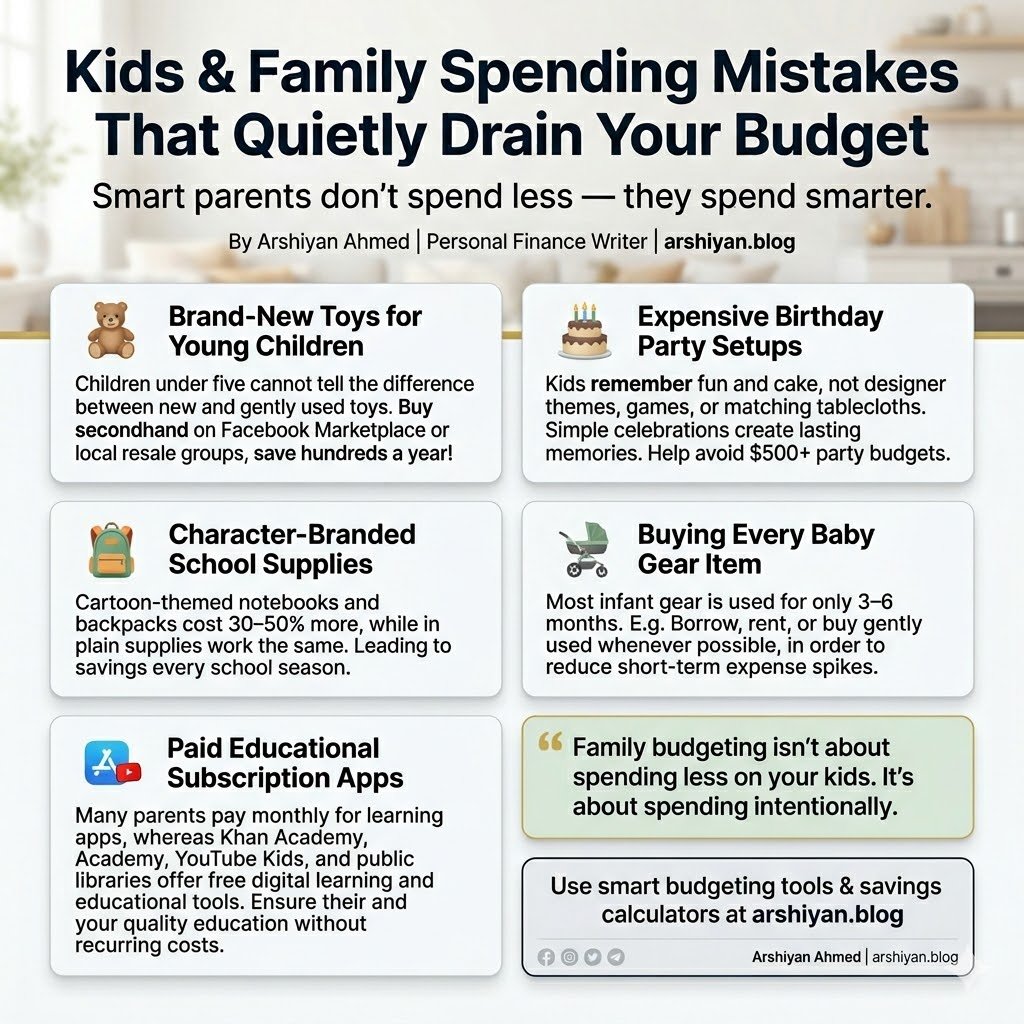
51. Brand-new toys for young children. Children under five cannot tell the difference between a new toy and a gently used one from Facebook Marketplace.
52. Expensive birthday party setups. Kids remember fun and cake. They do not remember whether the tablecloth matched the theme.
53. Character-branded school supplies. Plain notebooks and pencils cost half the price of the ones with cartoon characters on them.
54. Baby gear for every stage. Most infant equipment gets used for four months. Borrow, rent, or buy secondhand whenever possible.
55. Educational subscription apps for kids. Khan Academy is free. YouTube Kids is free. Public libraries now offer free digital resources most parents have never explored.
Car and Transportation Costs
56. Premium gasoline for a car that does not require it. Check your owner’s manual. Most vehicles run perfectly fine on regular.
57. Dealership oil changes. A quick lube shop charges half the price and does the same service.
58. Car washes weekly. Once or twice a month is plenty for most climates.
59. Extended warranties from dealerships. These are typically high-profit products for the dealer and low-value for you. Read the terms carefully before buying.
60. New car smell air fresheners. Nobody cares about this as much as you think they do.
Health and Wellness Purchases
61. Detox teas and cleanses. Your liver and kidneys do this for free. These products have virtually no scientific backing.
62. Vitamins and supplements without a clear need. Most supplements for healthy adults pass right through the body. Get bloodwork done before spending money on vitamins.
63. Expensive protein powders. A basic whey protein concentrate does the same job as the branded stuff with nicer packaging.
64. Weighted blankets from specialty stores. These sell for $40 on Amazon and $150 at a boutique. Same product.
65. Massage guns from premium brands. A mid-range massage gun on Amazon works well. You are paying for marketing with the $400 brands.
66. Blue light glasses without a prescription. The research on these is mixed at best.
67. Sleep tracking devices if you are not using the data. If you bought a Fitbit and check your sleep score once a week, it is a $150 bracelet.
Home and Garden Purchases
68. Buying tools you will use once. Rent tools from Home Depot for one-time projects. Tool libraries exist in many cities.
69. Seasonal decor every year. Decorations from three years ago look the same as this year’s. Rotate what you have.
70. Name-brand paint. Consumer Reports has repeatedly shown that mid-range paints perform comparably to premium brands.
71. Plants from garden centers when you can propagate. Most houseplants are shockingly easy to propagate. One plant becomes ten over a year.
72. Pre-filled flower arrangements. Grocery store flowers with a basic vase costs a third of what a florist charges for the same look.
73. Lawn care products for a small yard. A basic spreader and some DIY fertilizer beats paying $80 a month to a service company for a standard suburban lawn.
Entertainment and Lifestyle
74. Movie theater snacks. Eat before you go. A large popcorn costs $9 at the theater.
75. New books when libraries and LibbyApp exist. Libby connects to your library card and gives you free ebooks and audiobooks instantly.
76. Greeting cards at $7 each. A handwritten note on nice paper means more anyway.
77. Lottery tickets. This one is self-explanatory, but Americans spend an average of $200 a year on lottery tickets. That money invested compounds.
78. Magazine subscriptions you skim. Most of the content is online for free.
79. Concert merchandise. The $45 t-shirt will fade in six months. Your phone photos will outlast it.
80. Gaming microtransactions. These are designed by psychologists to feel small and add up fast. Track what you spend monthly before the next purchase.
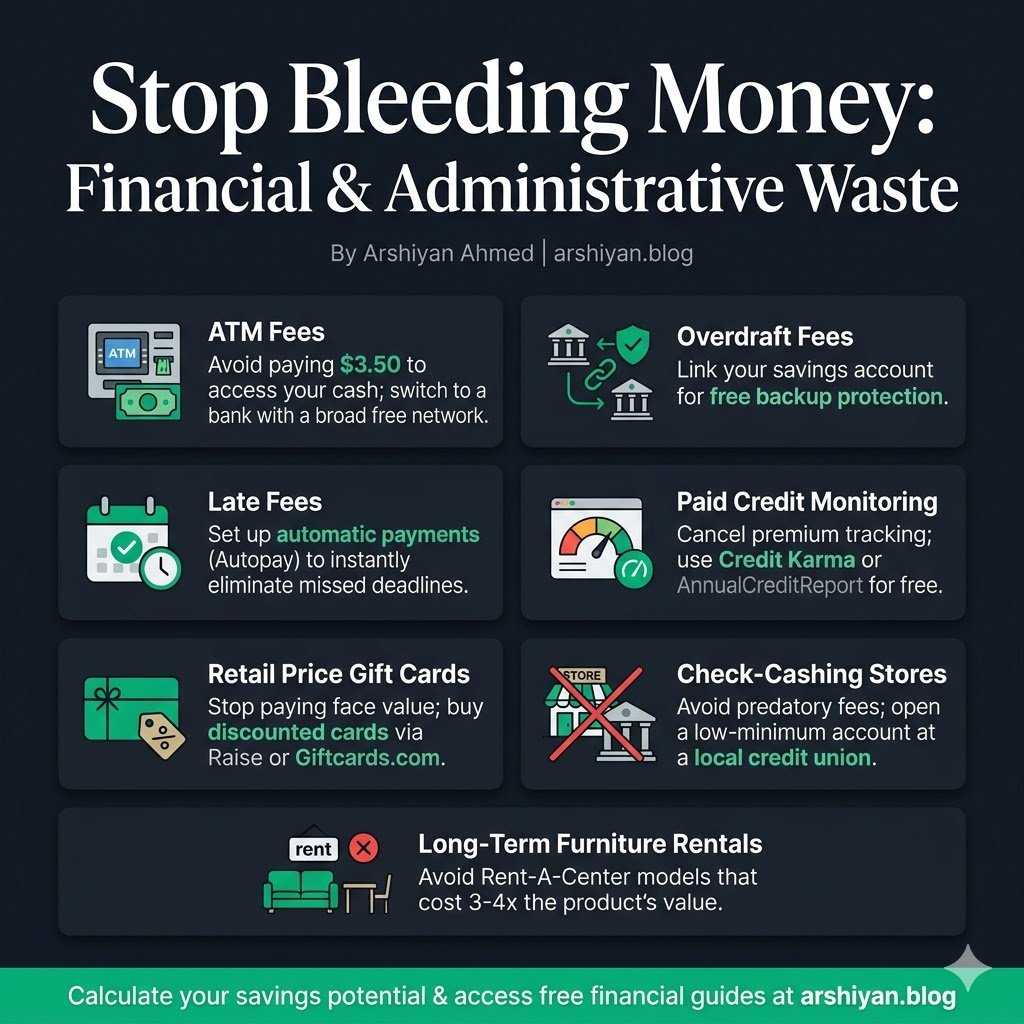
Financial and Administrative Waste
81. ATM fees. There is never a good reason to pay $3.50 to access your own money. Find a bank with a large free ATM network.
82. Overdraft fees. Link a savings account as backup. Most banks now offer overdraft protection for free.
83. Late fees on bills. Set autopay. This is one of the easiest wins in personal finance.
84. Paying for credit monitoring services. Credit Karma and AnnualCreditReport.com are free.
85. Buying gift cards at face value when discounted ones are available. Raise and Giftcards.com sell discounted gift cards for restaurants and retailers you already use.
86. Check-cashing stores. If you are unbanked, a credit union account has low minimums and no fees.
87. Renting furniture long-term from places like Rent-A-Center. The total cost is often three to four times the purchase price.
Financial Mistakes to Avoid in Your 20s and 30s
Travel and Vacation Spending
88. Travel insurance through the airline. Most travel credit cards include trip cancellation protection for free.
89. Airport parking for long trips. Off-site parking lots charge half the price and often offer free shuttles.
90. Checked bag fees. Pack lighter. A carry-on and a personal item covers most trips under a week.
91. Tourist trap restaurants near landmarks. Walk two blocks away. The food is better and half the price.
92. Hotel bottled water. Fill a bottle from the tap or ice machine.
93. Travel-size toiletries every trip. Buy once, refill from home bottles.
The Last Stretch
94. Buying duplicates of things you already own. Before buying something new, check what you have. Most homes contain multiples of scissors, tape, and chargers.
95. Specialty pet food from boutique brands. Many vets recommend standard brands like Purina Pro Plan over expensive boutique options for most healthy pets.
96. Ink cartridges at retail price. Third-party ink cartridges work well for everyday printing and cost a fraction of the OEM price.
97. Printer paper by the ream at office stores. Costco and Sam’s Club sell paper at significant savings per sheet.
98. Tech accessories at Apple or Best Buy prices. Anker makes phone chargers, cables, and power banks that match the quality of name brands at 30 to 40 percent of the cost.
99. Buying new when a refurbished version exists. Apple Certified Refurbished, Back Market, and Amazon Renewed offer electronics with warranties at meaningful discounts.
100. Gifts out of obligation rather than meaning. This one is not just financial. Spending $60 on a gift you picked up out of guilt for someone who does not expect it burns money and frankly does not feel good for either person. Thoughtful and affordable beats expensive and hollow every time.
Wrapping It Up Honestly
Nobody is going to apply all 100 of these at once, and that is fine. I did not either. I started with the easiest ones, the subscriptions I forgot about, the coffee runs, the bottled water, and let the savings build momentum. Try our free tool:
When I look at my bank account now compared to three years ago, the difference is not from some dramatic sacrifice. It is from dozens of small decisions made consistently over time. None of these cuts hurt. Some of them genuinely improved my quality of life because I stopped mindlessly consuming and started paying attention.
Your $800 a month is sitting in these 100 places. You just have to decide which ones to take back first.
Frequently Asked Questions
What is the $27.40 Rule?
Save $27.40 per day and you will have $10,000 in one year. It breaks a big savings goal into a small daily habit.
What is the 3 3 3 Rule for Money?
Spend 33% on needs, 33% on wants, and 33% on savings and investments. A simplified budget framework for balanced financial health.
What is the 3 6 9 Rule of Money?
- Save 3 months of expenses as an emergency fund starter
- Build it to 6 months for full security
- Invest after 9 months of stable savings are secured
How Many Americans Have $0 in Savings?
Approximately 22% of Americans have absolutely no emergency savings, according to a 2023 Bankrate survey.
How Many Americans Don’t Have $1,000 in Their Bank Account?
Nearly 56% of Americans cannot cover a $1,000 emergency expense from their savings, according to Bankrate research.

My name is Arshiyan Ahmed, and I write about personal finance because I’ve lived through the stress of financial uncertainty — and found my way out of it.
Over the past 7+ years, I’ve spent hundreds of hours studying budgeting systems, debt payoff strategies, and savings frameworks — not just in theory, but by applying them to real life. I’ve personally used the debt snowball method to eliminate credit card debt, built a 6-month emergency fund on a modest income, and helped friends and family create their first workable budgets.
I started Arshiyan Finance because I noticed one thing: most financial content online is either too complicated for beginners or too generic to be useful. I wanted to build a space where everyday people — whether you’re living paycheck to paycheck or just looking to manage money smarter — could find clear, actionable, and honest financial guidance without being sold something.
Everything I publish here is based on widely accepted financial principles, researched thoroughly, and written in plain language anyone can follow. The calculators, guides, and strategies on this site are the same tools I use and recommend to people I care about.
I’m not a licensed financial advisor, and nothing on this site is professional financial advice — but I do believe that access to good financial education can change lives. That’s why everything here is completely free.
When I’m not writing about money, I’m reading about it — because the more I learn, the better I can explain it to you.
Have a question or topic you’d like me to cover?